
Living in West Palm Beach means warm weather, tropical landscaping, and plenty of opportunities to enjoy the outdoors. Unfortunately, South Florida’s climate also creates favorable conditions for many insects and rodents.
Some of the most common pest problems in West Palm Beach include ants, cockroaches, termites, mosquitoes, and rodents. Warm temperatures, high humidity, seasonal rainfall, irrigated landscapes, and dense vegetation can allow pest activity to continue throughout much of the year.
For homeowners, effective pest management is usually less about reacting to a single bug and more about identifying the conditions that allow pests to enter, feed, reproduce, and establish themselves around a property.
Homeowners dealing with ongoing activity can contact Drake Lawn & Pest Control’s local West Palm Beach pest control team for an inspection and recommendations based on the conditions surrounding their property. Drake serves West Palm Beach and communities throughout Palm Beach County, including Lake Worth, Boynton Beach, Delray Beach, Palm Beach Gardens, Jupiter, Wellington, Boca Raton, and nearby areas.
Why Are Pests So Common in West Palm Beach?
West Palm Beach has many of the environmental conditions pests need to thrive: warmth, moisture, vegetation, food sources, and shelter.
Rainfall and irrigation can create damp areas around foundations and landscaping. Tropical plants provide insects with shelter. Pools, gutters, planters, drainage areas, and other water-holding locations can provide mosquito habitat. Meanwhile, gaps around doors, windows, plumbing, roofs, and utility penetrations can give pests access to the interior of a home.
The University of Florida’s Institute of Food and Agricultural Sciences (UF/IFAS) recommends an Integrated Pest Management, or IPM, approach that focuses not only on treating existing pests but also on reducing the conditions that attract them. Common recommendations include sealing entry points, keeping food contained, eliminating excess moisture, removing yard debris, trimming vegetation away from structures, and reducing standing water.
Homeowners can read more about these practices through the UF/IFAS Homeowner’s Guide to Selecting a Pest Control Service.
1. Ants
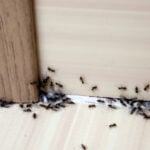
Ants are among the most persistent household pests found in South Florida.
UF/IFAS has identified several significant pest ants in southeastern Florida, including:
- Bigheaded ants
- White-footed ants
- Ghost ants
- Red imported fire ants
- Crazy ants
- Florida carpenter ants
In particular, UF/IFAS research has identified bigheaded ants, white-footed ants, and ghost ants among the problematic species found around structures in South Florida.
Why Ants Enter West Palm Beach Homes
Ant colonies are usually established outdoors, but worker ants may travel inside looking for food, moisture, and shelter.
Common problem areas include:
- Kitchens
- Bathrooms
- Pantries
- Window frames
- Plumbing penetrations
- Patios
- Pavers
- Mulch beds
- Irrigated landscaping
Heavy rain can also disrupt outdoor colonies and contribute to ants moving toward protected areas.
Fire ants present an additional concern because they can establish colonies in lawns and landscapes and deliver painful stings. UF/IFAS notes that fire ants may also forage indoors for food and moisture and can occasionally establish colonies inside buildings.
Simply spraying visible ants may not address the colony responsible for the activity. Identification is important because different ant species can require different control strategies.
For additional information, see Drake’s guide to common ant infestations in Florida.
2. Cockroaches and Palmetto Bugs
Cockroaches are another frequent pest concern for West Palm Beach homeowners.
Florida is home to several cockroach species. According to UF/IFAS, cockroaches commonly found in and around Florida homes include:
- American cockroaches
- Smokybrown cockroaches
- Australian cockroaches
- German cockroaches
- Asian cockroaches
- Florida woods cockroaches
- Brown cockroaches
Many of Florida’s larger outdoor cockroaches are commonly referred to as palmetto bugs.
Learn more from the UF/IFAS Cockroaches and Their Management guide.
Where Cockroach Problems Start
Different species behave differently.
Large outdoor cockroaches may enter through openings around doors, garages, roofs, drains, and utility lines. German cockroaches, on the other hand, are primarily indoor pests and can reproduce rapidly when food, moisture, and shelter are available.
Cockroach activity frequently develops around:
- Kitchens
- Under sinks
- Dishwashers
- Refrigerators
- Bathrooms
- Laundry rooms
- Cabinets
- Garages
- Plumbing areas
UF/IFAS emphasizes sanitation, removing food and water sources, reducing clutter, and sealing cracks and crevices as important components of cockroach management.
For established infestations, Drake provides professional general pest control services and has additional information about cockroach control methods.
3. Termites
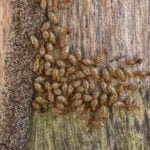
Termites deserve particular attention in South Florida because infestations may remain hidden while termites feed within or around a structure.
Two important termite groups for West Palm Beach homeowners are subterranean termites and drywood termites.
Subterranean Termites
Subterranean termites live primarily in the soil and travel between their colonies and sources of cellulose such as wood.
Potential signs include:
- Mud tubes along foundations or walls
- Swarming termites
- Discarded wings
- Damaged or hollow-sounding wood
- Unexplained wood deterioration
Florida also has invasive subterranean termite species, making professional identification especially important.
Drake’s subterranean termite control information explains the signs homeowners should watch for and the treatment options available for protecting a structure.
Drywood Termites
Drywood termites behave differently because they can live entirely inside relatively dry wood without maintaining contact with the soil.
UF/IFAS notes that one of the most recognizable signs of a drywood termite infestation is an accumulation of small fecal pellets beneath tiny openings in infested wood. These pellets can resemble coarse grains of sand.
Learn more through the UF/IFAS guide to drywood and dampwood termites.
Homeowners who notice pellets, discarded wings, wood damage, or suspected termite swarmers should consider having the property inspected rather than attempting to determine the species based solely on appearance.
Drake also provides specialized drywood termite control services for Florida properties.
4. Mosquitoes
Mosquitoes are an especially noticeable pest in South Florida because warm temperatures, frequent rain, vegetation, and numerous water sources can support mosquito development.
Mosquitoes do not necessarily need a pond or large body of water to reproduce.
The CDC notes that some mosquitoes can use surprisingly small water-filled containers, including:
- Flowerpot saucers
- Buckets
- Birdbaths
- Tires
- Toys
- Fountains
- Tarps
- Trash containers
- Other objects capable of holding water
Reducing Mosquitoes Around a West Palm Beach Home
One of the most useful steps homeowners can take is inspecting the property for water that remains after rainfall or irrigation.
The CDC recommends that homeowners empty, scrub, turn over, cover, or dispose of water-holding containers at least once a week. Window and door screens can also help prevent mosquitoes from entering homes.
UF/IFAS similarly recommends an integrated mosquito management strategy that emphasizes identifying and eliminating mosquito-production sites whenever possible.
For personal protection, the CDC recommends EPA-registered insect repellents and other bite-prevention practices when mosquitoes are active.
See the CDC’s recommendations for preventing mosquito and tick bites or learn about Drake’s professional mosquito control service.
5. Roof Rats and Other Rodents
Rodents are another pest homeowners in Palm Beach County should take seriously, particularly when vegetation provides access to roofs and attics.
Roof rats are especially important in Florida.
UF/IFAS describes the roof rat as Florida’s most abundant and significant rodent pest. Roof rats can establish themselves in locations including:
- Attics
- Soffits
- Wall voids
- Outbuildings
- Fruit trees
- Dense vegetation
Once inside, rodents may damage stored food, insulation, wiring, pipes, and structural materials.
The UF/IFAS roof rat guide provides additional information about the species and its behavior in Florida.
Signs of Rodent Activity
Watch for:
- Droppings
- Scratching sounds at night
- Gnaw marks
- Damaged food packaging
- Rub marks along walls
- Nesting material
- Unexplained attic activity
Tree limbs and vegetation touching a roof can also function as pathways into a structure. UF/IFAS recommends trimming branches away from exterior walls and roofs as part of an integrated pest-management strategy.
Rodent management generally requires more than placing traps. Entry points need to be identified and properly sealed to reduce the likelihood of reinfestation.
6. Spiders, Wasps, Millipedes and Other Occasional Invaders
Not every pest problem in West Palm Beach involves a large infestation.
South Florida homes may periodically experience spiders, wasps, millipedes, silverfish, beetles, ticks, centipedes, and other occasional invaders.
Some appear because environmental conditions outdoors have changed. Heavy rainfall, high moisture, landscaping, outdoor lighting, accumulated debris, or sudden weather changes can cause insects and arthropods to move toward homes.
Finding one occasional outdoor pest indoors does not necessarily indicate an infestation. Repeated sightings, however, may indicate an accessible entry point or favorable conditions around the property that need attention.
Drake’s general pest control program addresses a variety of common household pests while focusing treatments around areas where pests live and enter the structure.
How Can West Palm Beach Homeowners Prevent Pest Problems?
There is no way to eliminate every insect from a South Florida property, nor is that the objective of responsible pest management.
The goal is to make the home and immediate surroundings less conducive to pests.
A practical prevention strategy includes:
- Eliminate standing water. Check gutters, planters, buckets, birdbaths, pool equipment, toys, and drainage areas.
- Repair leaks and moisture problems. Pests including cockroaches and ants frequently take advantage of moist environments.
- Seal exterior openings. Inspect weather stripping, door sweeps, plumbing penetrations, windows, vents, soffits, and utility lines.
- Trim vegetation away from the structure. Branches and shrubs touching a home can create pest pathways.
- Keep food properly stored. Use sealed containers and clean spills and crumbs promptly.
- Keep garbage containers closed. Trash and food residue can provide pests with reliable food sources.
- Reduce clutter. Cardboard, debris, unused containers, and dense storage areas provide hiding places.
- Inspect the property regularly. Finding pest activity early generally makes it easier to identify its source.
These practices closely follow the IPM principles recommended by UF/IFAS, which emphasize inspection, prevention, sanitation, exclusion, monitoring, and targeted treatment rather than relying entirely on pesticide applications.
When Should You Call a Pest Control Professional?
A single insect does not always require professional treatment. However, homeowners should consider an inspection when they experience:
- Repeated pest sightings
- Large numbers of ants or cockroaches
- Suspected termite activity
- Rodent noises or droppings
- Recurring pest activity despite DIY treatments
- Persistent mosquitoes around outdoor areas
- Pest activity inside walls or attics
- Uncertainty about the species involved
Professional identification can be particularly valuable because treatment strategies vary substantially between pest species.
UF/IFAS recommends considering professional pest-control services for public-health and structural pests including rodents, mosquitoes, bed bugs, cockroaches, ants, termites, and other wood-destroying organisms.
Professional Pest Control in West Palm Beach, FL
West Palm Beach homeowners deal with pest pressures that are closely tied to South Florida’s climate and landscape. Ants may move through kitchens and patios, cockroaches can exploit moisture and entry points, termites can remain concealed within structures, mosquitoes can develop in standing water, and roof rats may use vegetation to access attics.
Successful pest management begins with correctly identifying the pest and understanding why it is present.
Drake Lawn & Pest Control has served Florida homeowners since 2004 and provides pest control, termite protection, mosquito control, lawn care, wildlife management, and other property services through its West Palm Beach location.
If you’re experiencing recurring pest problems, schedule a professional inspection with Drake’s West Palm Beach pest control specialists to identify the source of the activity and determine an appropriate treatment and prevention plan.
Frequently Asked Questions About Pests in West Palm Beach
What are the most common pests in West Palm Beach, Florida?
Ants, cockroaches, mosquitoes, termites, and rodents are among the most important pest problems West Palm Beach homeowners may encounter. South Florida also supports many occasional pests including spiders, wasps, millipedes, ticks, silverfish, and beetles.
Are pests a year-round problem in West Palm Beach?
Pest activity can occur throughout the year in South Florida because temperatures generally remain warm. Rainfall, humidity, drought, irrigation, vegetation, and seasonal reproductive cycles can cause particular pests to become more noticeable at different times.
What ants are common in South Florida?
UF/IFAS identifies bigheaded ants, white-footed ants, ghost ants, red imported fire ants, crazy ants, and Florida carpenter ants among important pest ants found around structures in South Florida.
Are palmetto bugs cockroaches?
Yes. “Palmetto bug” is a common informal name applied to several large cockroach species found in Florida. UF/IFAS notes that American, Australian, brown, and smokybrown cockroaches are among the larger species commonly referred to this way.
What types of termites are found in South Florida?
Both subterranean and drywood termites are important structural pests in Florida. Subterranean termites maintain connections with the soil, while drywood termites can establish colonies entirely within wood.
How can I reduce mosquitoes around my West Palm Beach home?
Inspect the property for objects that collect water and empty, scrub, cover, turn over, or remove them regularly. The CDC recommends addressing water-holding containers at least weekly because mosquitoes lay eggs in or near water.
When should I schedule a professional pest inspection?
Consider an inspection when pest activity is recurring, when you cannot identify the pest, when rodents or termites may be involved, or when DIY methods repeatedly fail to resolve the source of the problem. A professional inspection can identify pest species, entry points, nesting areas, moisture problems, and other contributing conditions.
 Brandon Hill
Table of Contents
- Why Are Pests So Common in West Palm Beach?
- 1. Ants
- 2. Cockroaches and Palmetto Bugs
- 3. Termites
- 4. Mosquitoes
- 5. Roof Rats and Other Rodents
- 6. Spiders, Wasps, Millipedes and Other Occasional Invaders
- How Can West Palm Beach Homeowners Prevent Pest Problems?
- When Should You Call a Pest Control Professional?
- Professional Pest Control in West Palm Beach, FL
- Frequently Asked Questions About Pests in West Palm Beach
Similar Posts
Schedule Free Inspection
Recent Blogs

Brown Recluse Spiders in Florida Identification and Risk
Finding a brown spider in a closet can raise an immediate question: is it a brown recluse? In Florida, that... Read More
- Oct 19, 2026
- 6 min read read

Black Widow Spiders in Florida Identification Bites and What to Do
A black spider beneath a patio chair deserves a cautious response, especially if it has a rounded abdomen and a... Read More
- Oct 12, 2026
- 6 min read read

Flying Ants vs Termites How to Tell the Difference
Winged insects gathering near a window can leave a homeowner with an urgent question: are they flying ants or termites?... Read More
- Oct 07, 2026
- 6 min read read