What Are Chinch Bugs?
Chinch bugs are small but highly destructive turf pests that commonly target warm‑season grass like St. Augustinegrass. They feed by piercing plant tissue and sucking sap while injecting toxic saliva, which leads to yellowing, wilting, and expanding dead patches of turf.
How to Identify a Chinch Bug Infestation
- Dry, yellow, or scorched patches that spread outward, often starting in full‑sun areas
- Lawns that do not rebound with irrigation
- Adults are black with white wings; nymphs are reddish‑orange with a white band
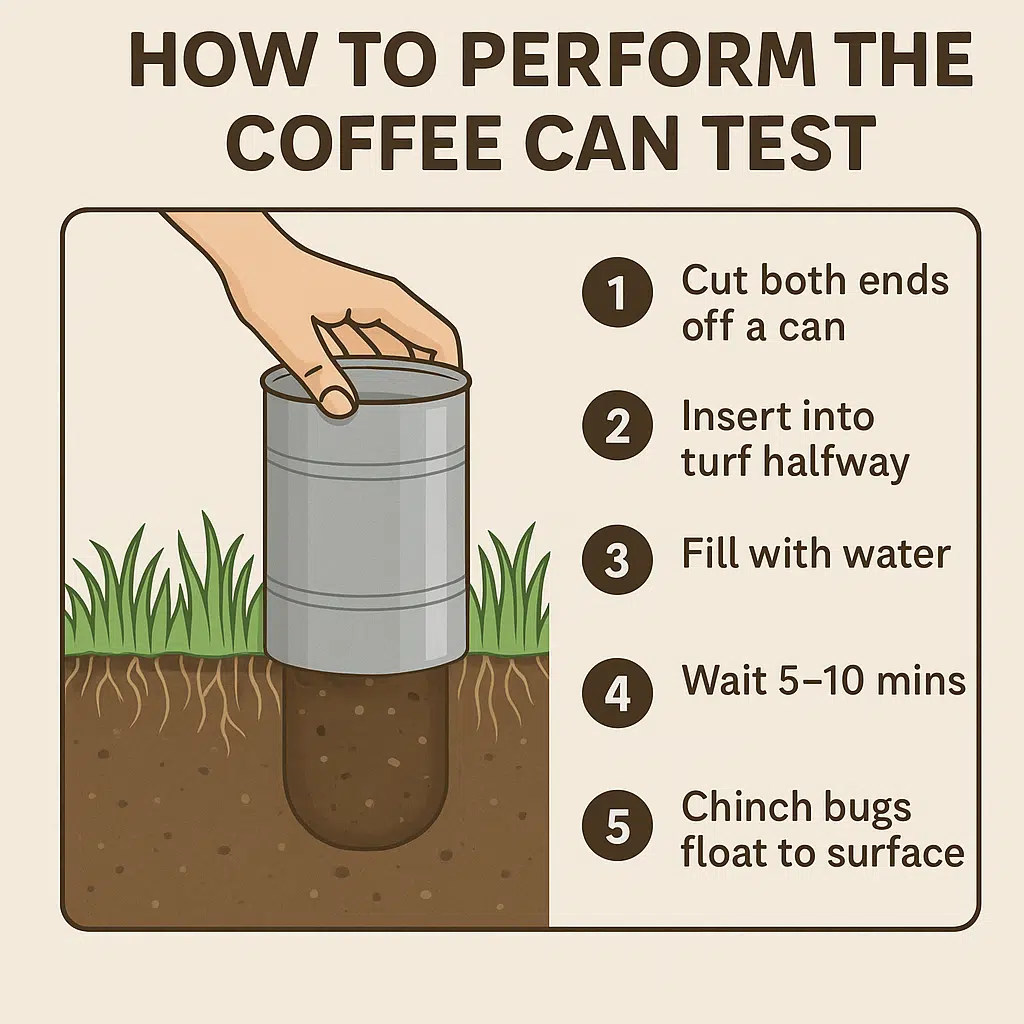
- Coffee can be tested: Insert a bottomless can at the edge of damaged turf, fill with water, and watch for chinch bugs floating up within 5–10 minutes
Why Regular Insecticides May No Longer Work
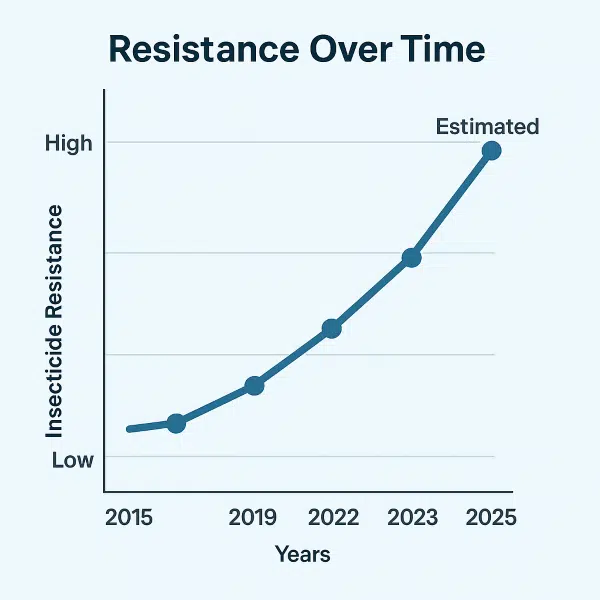
In Florida, southern chinch bugs have developed resistance to multiple insecticide classes, including pyrethroids (e.g., bifenthrin) and neonicotinoids (e.g., imidacloprid). Recent extension updates note that 2024 was among the most challenging seasons for control, with signs that pressure may continue.
Licensed vs. Over-the-Counter Solutions
Over‑the‑counter (OTC) lawn insecticides often contain lower concentrations of active ingredients and are frequently applied without rotating modes of action, which can worsen resistance. Licensed professionals can access restricted‑use products and professional‑grade formulations and are trained to rotate chemistries and apply them for optimal coverage and efficacy (UF/IFAS Turf Insect Pest Management).
The Role of Professional Pest Control Companies
- Access to stronger tools: Restricted‑use or higher‑concentration formulations not sold at retail
- Application expertise: Proper rates, timing, coverage, and penetration into thatch
- Resistance management: Rotating modes of action and avoiding repeat exposure to a single class
- Ongoing monitoring: Follow‑ups to confirm knockdown and prevent reinfestation
- Integrated Pest Management (IPM): Combining chemistry with cultural and environmental fixes
Best Practices for Long-Term Chinch Bug Control
- Rotate insecticide classes (modes of action) rather than reusing the same active repeatedly
- Dethatch to reduce harborage and improve product contact
- Water deeply but infrequently to promote deep roots and turf vigor
- Avoid excessive nitrogen fertilization that promotes tender growth
- Mow at recommended heights to reduce stress on the turf
Final Thoughts
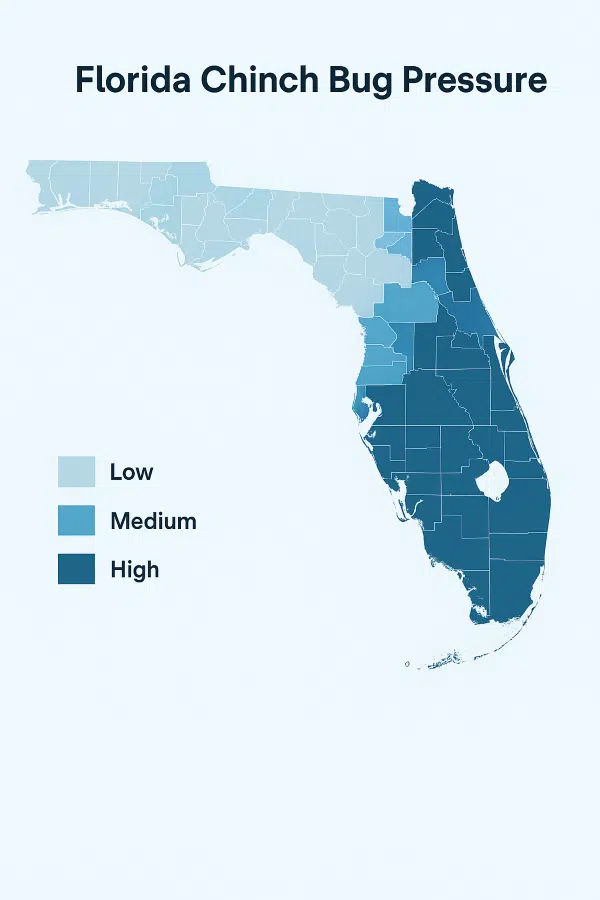
In Central Florida, chinch bug pressure is increasingly difficult due to resistance and environmental stresses. While DIY treatments may help in some situations, many “regular” products underperform against resistant populations. Partnering with a licensed provider—equipped with professional‑grade chemistries and resistance‑aware strategies—often delivers the most reliable, lawn‑safe results.