
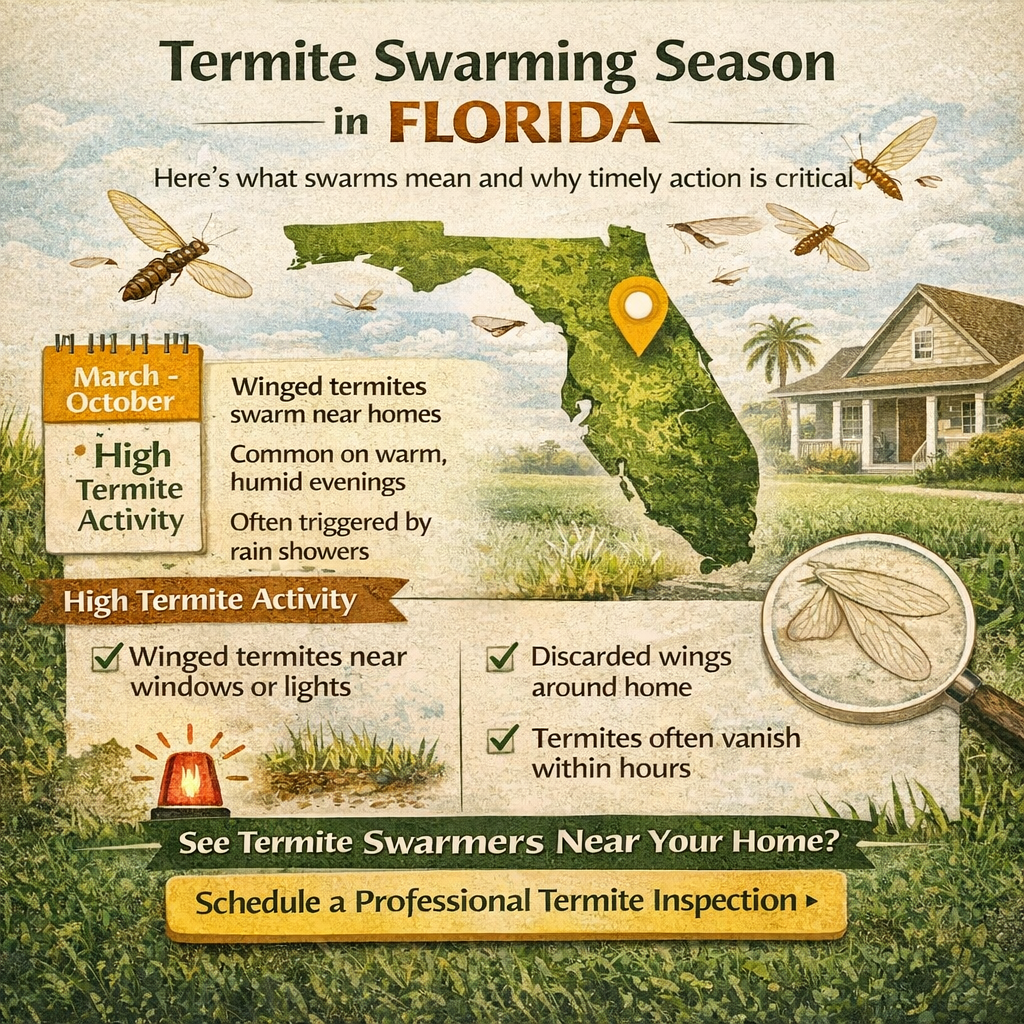
Each year, Florida homeowners report seeing winged termites—often called swarmers—inside or around their homes. While these insects may appear suddenly and disappear just as quickly, termite swarming is a serious warning sign that should never be ignored.
This guide explains what termite swarming season means in Florida, when swarms typically occur, why they happen, how to identify termite swarmers, and when professional inspection is critical.
What Is Termite Swarming?
Termite swarming is a natural part of a termite colony’s reproductive cycle. Swarmers are winged termites that leave an established colony in search of new locations to form additional colonies.
Seeing swarmers indoors or near your home typically indicates that a mature termite colony is already nearby—and possibly inside the structure.
When Is Termite Swarming Season in Florida?
Florida’s warm, humid climate allows termites to swarm for much of the year, but activity increases during specific periods:
- Subterranean termites: Commonly swarm in spring, often after rainfall
- Drywood termites: Frequently swarm from late spring through summer
- Formosan termites: Typically swarm in late spring or early summer
Swarming often occurs during warm, calm evenings, especially after rain events.
Why Termites Swarm
Termites swarm to establish new colonies. Once a colony reaches maturity, it produces reproductive termites that leave the nest to mate and search for suitable environments.
Florida homes provide ideal conditions for new colonies due to moisture, wood structures, and warm temperatures. Even brief swarming activity can signal a long-standing infestation.
Signs You’ve Seen Termite Swarmers
Homeowners may notice termite swarming through the following signs:
- Winged insects near windows, doors, or light sources
- Discarded wings on windowsills or floors
- Swarmers emerging from walls, ceilings, or baseboards
- Insects appearing suddenly and disappearing within hours
Even if swarmers disappear quickly, the colony remains active.
Termite Swarmers vs. Flying Ants
Termite swarmers are often mistaken for flying ants. Key differences include:
- Termites have straight antennae; ants have bent antennae
- Termite wings are equal in size; ant wings are uneven
- Termites have broad waists; ants have narrow waists
Correct identification is important, as termites pose a far greater risk to structural integrity.
What Termite Swarms Mean for Your Home
Seeing termite swarmers does not mean termites are “trying” to get into your home—they are already nearby. Swarms indicate a mature colony capable of causing extensive damage.
Termites can remain hidden for years, feeding on wood from the inside out. By the time swarmers appear, damage may already be present.
When to Call a Termite Professional
If you see termite swarmers inside or around your home, professional inspection is strongly recommended. Termite specialists can identify the species, locate colonies, and recommend appropriate treatment options.
Early detection and treatment can prevent significant structural damage and costly repairs.
For Florida homeowners, scheduling a professional termite inspection during swarming season is one of the most effective ways to protect your home.

Table of Contents
Similar Posts
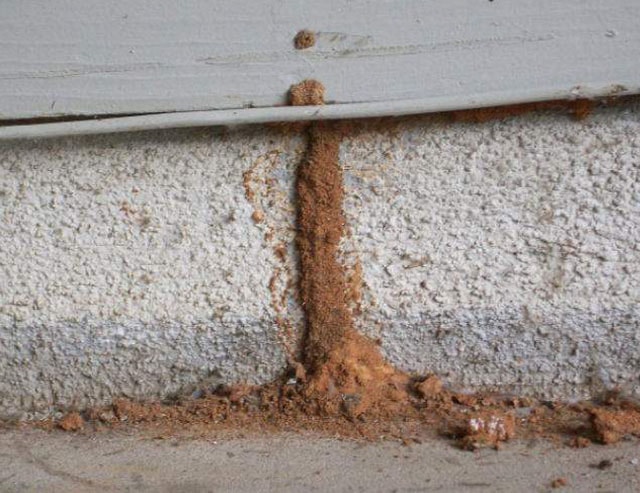
What Do I Do If I Find Termite Tubes Around My Home?
- Sep 25, 2019

How to Find Termites
- Jun 03, 2021
Schedule Free Inspection
Recent Blogs
Houston’s warm climate and frequent rainfall create ideal conditions for lawn pests to thrive. Many homeowners don’t realize their lawn... Read More
- Feb 12, 2026
- 5 min read read
Florida homeowners often struggle with recurring lawn pest problems that seem to persist no matter the season. Unlike regions with... Read More
- Feb 05, 2026
- 4 min read read
Florida’s warm, humid climate creates ideal conditions for lawn pests to thrive nearly year-round. From chewing insects to underground destroyers,... Read More
- Jan 26, 2026
- 5 min read read